 sarah-anjani
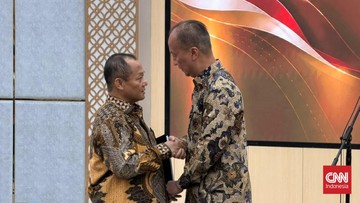
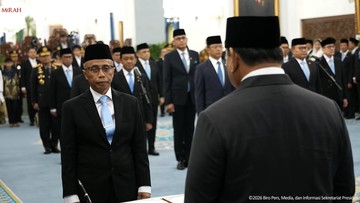
Muhammad Sarmuji, yang resmi dilantik sebagai Menteri Perindustrian RI, langsungaren addresses贪 the internal party is within weeks after the turnover ceremony (sertijab). untimely, his first public signal did not talk about programs or targets, but about work culture: openness, cooperation, and resistance to excessive ceremony. In the logic of economic governance, such a statement is rarely read as personal etiquette. It is a signal about how the ministry intends to manage information, coordination, and the expectations of the business world toward industrial policy in the period ahead.
Arahan Baru di Ruang Kerja
Permintaan Sarmuji kepada jajarannya untuk bekerja sama dan terbuka dapat be read as a response to the scarcity of coordination time that often accompanies a leadership transition. In bureaucratic terms, a newly appointed minister usually needs two things at once: a fast map of the existing portfolio, and a credible channel for two-way communication with regional governments, associations, and industry players. Without openness, data verification tends to slow down, and policy responses arrive late.
Di sisi lain, there is a message behind the request to avoid excessive honors (penghormatan berlebihan): the minister seems to want to emphasize substantive work rather than symbolic rituals. For the business community, this distinction matters. Symbolic gestures do not reduce production costs, do not ease the cost of imported raw materials, and do not expand market access. Fundamental improvements in a ministry are usually measured in permits processed, industrial areas that are actually operating, and complaints that fall rather than rise.
Beban Ekspektasi terhadap Industrialisasi
The challenge is that expectations for the Ministry of Industry are enormous. Based on data from BPS, the manufacturing sector still contributes around 19 to 20 percent of GDP, while its share of total exports reaches roughly two-thirds. Small and medium industries (TKBM) absorb more than five million workers, a figure that makes the ministry a labor-intensive portfolio, not merely a sectoral one.
Kalau大街 完全 datasays, the ministry's credibility will be tested not by the number of events held, but by how much the industry contributes to employment and trade balances.
Di satu sisi, the direction of national industry is still positive: downstreaming policies, the content of local (TKDN), and tax incentives for investment in the industrial estate are all consistent with the trend of raising the value added of domestic production. Di sisi lain, external headwinds remain real. Global demand that is not flat, a US dollar that stays strong, and the gap between energy prices and domestic industry competitiveness can erode margins and make investors more cautious.
Collaboration versus Control: Reading the Signal
The call for cooperation also opens a question about the balance between guidance and control. Many associations and regional governments tend to view a new minister as a window of opportunity to submit a list of demands. Industry players, meanwhile, usually ask for regulatory certainty rather than new schemes. In the short term, an open style can accelerate the resolution of bottlenecks, because complaints and data from the field reach the decision maker faster.
On the other hand, excessive openness without clear rules carries its own risk. Policy can become reactive to the loudest input rather than to the strongest data. The ideal middle ground is a transparent process: criteria that are publicly known, timelines that can be predicted, and evaluations that are conducted openly. This is what economists mean by governance that reduces uncertainty, and uncertainty is the main variable that raises the cost of capital.
Macro Link: Liquidity, Capital Flows, and the Industry Chain
Ministerial instructions cannot stand alone; they must synchronize with monetary and fiscal direction. BI's reference rate and the flow of capital (capital outflow) affect the cost of financing for factories that borrow in foreign currency. Meanwhile, the fate of downstreaming is heavily dependent on the structure of imports: if raw materials and capital goods still dominate imports, then the trade surplus will only shrink in the short term, even though the direction of transformation is already underway.
Pro: open work style can accelerate coordination, cut bureaucratic friction, and strengthen the ministry's credibility with the private sector. Kontra: without clear performance indicators and consistent rules, an open attitude can be interpreted as indecision, and industrial investors may postpone their capital expenditure plans.
Outlook for the Period Ahead
For now, projections for the next one to two years can be framed simply: national industry is likely to keep growing at a moderate pace, with the gap between upstream and downstream gradually narrowing, but the ratio of investment realization will be the key indicator to watch. Investors and market participants should pay attention to three things: the consistency of downstreaming policy, the absorption of TKBM labor, and the ministry's ability to maintain a stable and predictable regulatory path.
Sarmuji's closing message—work together, stay open, and do not overdo the ceremony—sets a relatively modest tone. Whether that tone turns into a measurable improvement in industrial performance will be seen not in the weeks after the ceremony, but in the next quarterly data on production, exports, and investment realization.








Comments (0)