 yudi-kurniawan
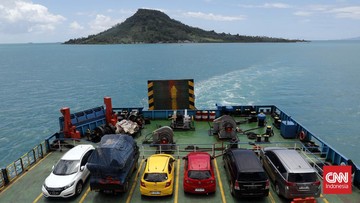
Berdasarkan data Kementeriangombolan evaluasi cautiously: regulators recently confirmed that battery electric vehicles may be transported on sea-crossing ferries, provided they meet a number of technical requirements. At minimum, the vehicle must be placed in a designated area rather than mixed with conventional cars, and the stored electrical power of the battery must be reduced before loading. This is not a full opening: it is a conditional permit intended to keep fire safety standards in traditional roll-on/roll-off vessels.
For the automotive and energy sectors, the policy carries a much wider economic meaning. Indonesia's electric vehicle market is still in the early stage of its adoption curve, but growth is rapid and any change in logistics rules directly affects how quickly that curve can steepen.
Syarat Teknis: Mengapa Daya Baterai Harus Dikurangi
Di balik Surprise放出 regulation lies a simple physics problem. A lithium-ion battery stores energy in a chemical state that can release suddenly when cells are damaged, a phenomenon known in the industry as thermal runaway. Once a battery enters thermal runaway, it produces its own oxygen, burns hotter than ordinary fuel, and cannot be extinguished by conventional fire extinguishers alone. Water immersion and prolonged cooling are usually required.
Because a ferry is a steel box floating on the sea with limited evacuation capacity, the regulator's approach is to lower the probability of ignition rather than rely on extinguishing fire after it starts. Reducing the state of charge — the percentage of energy remaining inside the pack — lowers the total heat that can be released. Industry practice in shipping and aviation, for example, has long required so-called emergency or precautionary discharge levels for exactly the same reason.
Additionally, a 60 kilowatt-hour battery pack typically weighs between 300 and 400 kilograms. That weight is negligible on a road, but on a passenger vessel with tight deck-load limits and stability calculations, it changes the vessel's displacement and trim. Placing electric vehicles in a separate, reinforced section is meant to keep the weight distribution predictable and to allow crew to isolate a problem vehicle quickly.
Di Satu Sisi: Pasar yang Tumbuh dan Biaya yang Turun
Data[permendagri]yang can be cited cautiously: Indonesia's battery electric vehicle sales were recorded at roughly 17 thousand units in 2023 and expanded to approximately 43 thousand units in 2024, based on industry association figures — a growth rate close to 150 percent year-on-year. Even so, the market share remains below two percent of total vehicle sales of around 1.3 to 1.6 million units per year. In other words, the penetration is still small, and the direction is unmistakable.
Supporting this trend is the falling cost of the battery itself. Global lithium-ion pack prices have declined steadily from around 140 US dollars per kilowatt-hour in 2022 to roughly the 100 to 115 dollar range by 2024, an average drop of around 15 to 20 percent year-on-year. When the single most expensive component of an electric vehicle becomes cheaper, the economics of ownership begin to shift — and logistics flexibility is part of that equation. A car that cannot be ferried is a car with a narrower addressable market, particularly in regions like Nusa Tenggara, Sulawesi, or the eastern islands where sea transport is the primary connection.
"The regulation is not primarily about transport. It is about how quickly an electric vehicle can reach the archipelagic market, where road infrastructure is limited but electricity supply is increasingly reliable," according to one energy analyst who has followed Indonesian electrification policy.
Di Sisi Lain: Risiko Residual, Asuransi, dan Sentimen Pasar
Counterpoint must also be acknowledged. Every accident involving a battery vehicle at sea carries reputational and financial consequences far beyond the vessel involved. Insurers tend to price risk conservatively: if the probability of a thermal event becomes publicly associated with ferries, premiums for electric vehicles carried at sea, and even for electric vehicles shipped by land, could rise. That would quietly erode the cost advantage that declining battery prices have delivered.
There is also a question of capacity. If ferries allocate a special deck section to electric vehicles, that space is taken from high-margin conventional cars and cargo. For short routes with tight scheduling, this is a real operational cost that will eventually be reflected in ticket prices. Passenger sentiment, which is highly sensitive to safety narratives, may also shift against electric vehicles after any well-publicised incident — a risk that no amount of favourable data can immediately repair.
For investors and lenders, the relevant variable is not whether electric vehicles can board a ferry, but whether banks and leasing companies are willing to finance them at scale. That depends on residual value data, insurance terms, and battery health standards — none of which exist yet in sufficient depth in Indonesia.
Proyeksi dan Kesimpulan
Macro-wise, the policy is a marginal positive. Indonesia still imports a substantial portion of its liquid fuel needs, and every barrel of gasoline or diesel that is not burned is a reduction in the trade balance. However, with electric vehicles below two percent of the market, the contribution to oil savings will remain statistically negligible for years. The bigger effect is symbolic and infrastructural: it signals that regulators are treating electric mobility as a transport system rather than a niche product.
Two indicators are worth monitoring. First, passenger vehicle sales in ferry-connected regions, to see whether new regulation actually lifts regional electric vehicle penetration. Second, battery pack prices and fire incident statistics, because those two variables will determine whether insurers and financiers follow the regulator's lead or lag behind it.
In short, the relaxation of ferry rules expands the market's playing field, but it does so by transferring risk from the highway to the deck. Investors should read this as an enabling framework, not as a profit guarantee.










Comments (0)