 yudi-kurniawan
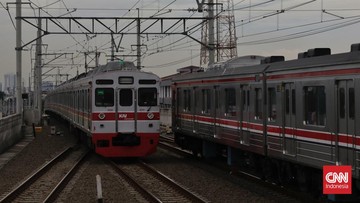
Berdasarkan catatan realisasi belanja negara dan data BPS mengenai perlambatan pertumbuhan ekonomi, itertools policymakers Indonesiaoan{and} operatorIgnored{&} engaged in an effort to revitalize railway-based public transportation without requiring a full capital outlay. One approach recently confirmed by PT Kereta Api Indonesia (KAI) is a plan to bring in used electric multiple unit trains or KRL from Japan, transferred as a hibah—meaning a grant or free-of-charge donation—rather than through a conventional purchase. The distinction matters, because it changes the financial structure of the transaction: there is no purchase price, but there is also no supplier who formally bears warranty obligations in the same way as in a sale-and-purchase contract.
Fakta Dasar: Dari Jual-Beli ke Hibah
KAI has clarified that the plan to import used KRL from Japan is positioned as a hibah scheme, not as a commercial trade. In practical terms, the trains arrive as a donation, and before being allowed to carry passengers in Indonesia they must undergo an assessment process including a series of inspections covering technical condition, safety, and conformity with domestic regulations.
This framework follows a relatively common pattern in infrastructure cooperation in the region. The sending party provides the asset, while the receiving party is responsible for absorbing, adapting, and maintaining it. One reference point that helps explain the appeal of this format is Japan's railway history. Japan's rail network totals roughly 20.000 kilometer, and its bullet train line Shinkansen has been operating since 1964 with an average delay of less than one minute per train. For countries with limited budgets, obtaining spare capacity or idle rolling stock from such a mature system through cooperation can shorten the path to service.
Pro: Why a Hibah Format Can Be Economically Rational
Di satu sisi, the grant format lowers the entry threshold for capital-intensive assets. The fundamental problem facing KAI is not simply a lack of demand, but a shortage of rolling stock capacity amid rising passenger volumes in the Jabodetabek area. Adding new trains normally means years of procurement lead time, factory acceptance tests, and commissioning. A donation sourced from existing Japanese fleets can compress that timeline considerably.
Second, there is a technology-transfer dimension. Used Japanese trains come with accumulated engineering experience, spare-part catalogs, and maintenance procedures that are already proven under high-intensity daily operations. For rail electrification and signaling systems, know-how is often more valuable than the steel itself.
Third, the grant model reduces the risk of a fiscal burden landing on the state budget at the start, and it can be read as part of broader decarbonization push. Rail transport emits far fewer greenhouse gases per passenger-kilometer compared with private cars, so shifting share from road to rail supports national emission-reduction targets.
Kontra: The Cost Does Not Disappear, It Only Moves
Di sisi lain, hibah is not the same thing as free operating capability. The main issue is life-cycle cost. Once the trains enter service, Indonesia still bears the cost of periodic inspections, component replacement, depot facilities, and personnel training. Used rolling stock typically carries higher maintenance intensity per year of operation than a new unit, particularly for consumable components such as braking systems, traction motors, and air-conditioning units.
There is also a regulatory angle worth noting. Domestic rules generally set a maximum age limit for passenger railway vehicles, commonly around 40 years, and every imported unit must be measured against that ceiling as well as technical specifications on dimensions, axle load, signaling compatibility, and platform height. This is precisely why KAI emphasizes the assessment and inspection stage rather than promising an immediate operational date.
Fourth, spare-parts dependency deserves attention. If a component is designed exclusively for a particular Japanese series, dependence on overseas suppliers can weaken bargaining position and create vulnerability in terms of delivery time and currency exposure. An aging fleet also complicates long-term fleet planning, because operators must maintain mixed age groups over many years.
What It Means for the Industry and the Reader
For industry participants, the plan opens questions rather than closing them: how the grant is documented, how liability and safety responsibility are shared, who funds the heavy overhaul, and what happens to the units in the final years of their operational life. Sentimen pasar among observers will likely be mixed—welcoming as evidence of cooperation and capacity expansion, but cautious about the sustainability of the post-arrangement cost structure.
For ordinary passengers, the more relevant metric is simple: added capacity should translate into better service frequency and reliability. Japan's railway performance record suggests that technology can be transferred successfully, yet the outcome depends heavily on local maintenance capability and institutional discipline.
At bottom, the import of used KRL from Japan in a hibah format is rational as an acceleration strategy, especially when compared with the alternative of waiting years for new units. Di satu sisi, it buys time and reduces initial capital expenditure. Di sisi lain, it shifts rather than eliminates costs, transferring them into the operating budget and the supply chain. Both perspectives are valid, and the decisive factor will be the transparency of the technical assessment results and a credible plan for funding the maintenance cycle over the long term.






Comments (0)