 mega-lestari
Berdasarkan data Kementerian Energi dan Sumber Daya Mineral (ESDM) per 2024,资料显示 geothermal contribute roughly 11 percent of national electricity supply, while the government in the National Energy Policy (KEN) set a target of a 23 percent renewable energy mix by 2025. Behind that target sits a less publicly discussed actor: PT Geo Dipa Energi (GDE), a state-owned company holding the People's Settlement Tourism Area (PPSP) Panutan concession in West Java, with installed capacity of more than 1,000 megawatts spread across seven geothermal fields. The status of this company—business actor, infrastructure provider, or fiscal instrument—becomes important as the new Danantara platform grows.
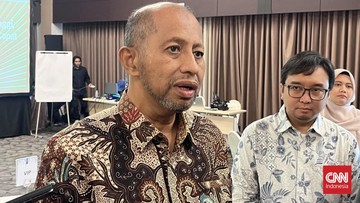
President Director Geo Dipa, Yudistian Yunis, explained that the company chose to stay under the Ministry of Finance (Kemenkeu) rather than transfer to the Danantara holding. His reasoning: GDE's role is not merely commercial, but supports the green economy agenda and government fiscal policy. Ownership, in other words, is being treated as a policy instrument. That framing places Geo Dipa inside the same category as other fiscal assets under the Ministry, rather than inside the new SOE consolidation architecture.
Reasons for Staying under the Ministry of Finance
In one sense, the decision is rational from a regulatory standpoint. Danantara, formed in early 2025 with initial capital of around IDR 1 trillion sourced from Danantaraobligasi, was designed primarily to manage state asset ownership, dividend flows, and investment acceleration. Meanwhile, the Ministry of Finance functions differently: it manages the state budget, debt structure, subsidies, and liability management. Geo Dipa's capital expenditure cycle—drilling, field development, steam pipeline construction—runs over 10 to 20 years, and is far more similar to a long-term budget commitment than to a portfolio asset targeted for dividend yield.
Di sisi lain, a transfer to Danantara could have opened room for more aggressive efficiency: standardizing procurement, integrating GDE with other SOE energy entities, and opening the door for a partial IPO or strategic partnership. Those efficiency gains, according to some energy policy observers, are exactly what the SOE consolidation program was created to harvest. By staying, Geo Dipa forgoes some of that pressure.
" geothermal is a long-horizon infrastructure asset, so its governance must follow the investment cycle, not the quarterly dividend cycle." — an observer of energy and fiscal policy
Green Economy as Rationale
Di satu sisi, argument green economy has a real basis. Based on Bank Indonesia data on financing flows, sustainable finance—term covering green bonds, sustainable bonds, and green loans—has posted positive year-on-year growth, with the government itself having issued green sukuk since 2018. Geothermal fits neatly into that narrative: firm, on-baseload, low-carbon, and therefore compatible with the decarbonization pathway of the power sector. A company that develops geothermal fields does not only sell electricity, but also reduces dependence on imported coal and gas, which affects the trade balance and the current account balance—a concern that the central bank continues to highlight in its monetary policy outlook.
Di sisi lain, green credentials do not automatically translate into financial health. Geothermal development costs are high, construction periods are long, and exploration risk is substantial—several fields in the company's pipeline have yet to reach production. Rasio capex against revenue generation in this sector is among the highest in the energy business. Public data on Geo Dipa's profitability has so far been limited, meaning that the claim of "supporting fiscal policy" cannot be fully evaluated by outsiders.
Fiscal Burden versus Efficiency Gains
The core debate concerns the burden on the state budget. Every geothermal field built without positive cash flow becomes a non-cash subsidy in principle, even if it is recorded as an investment. Meanwhile, tax revenue and dividend receipts from SOEs are the backbone of state revenue, and the Ministry of Finance continues to press for higher dividend ratios from SOEs to fund the 2025 Budget. If Geo Dipa remains under the Ministry, its dividend contribution to revenue must compete with capital expenditure needs.
Proponents of consolidation argue that Danantara could make this trade-off more transparent, because assets become comparable in valuation and are easier to benchmark against market indices. Kontra, ownership experts note, argue that moving a strategic asset does not automatically fix its economics—a change of parent does not change the geology. What determines outcomes is exploration success, drilling costs, and power purchase agreement terms.
Implications for Investors and the Market
For the market, the decision produces a specific signal: not all SOEs will be absorbed into the new holding. This is important for sentiment and for portfolio positioning in state-linked instruments such as Danantaraobligasi, because assets left behind will still compete for the same fiscal envelope. Meanwhile, for the energy sector, geothermal remains a niche with limited liquidity; there are no listed pure-play players comparable to the coal or oil companies, so public exposure is largely indirect.
Going forward, several indicators are worth watching: the timing of exploration and production targets in the company's pipeline, the capital expenditure realization in the 2025 Budget, and whether the Ministry conducts an independent valuation review. Based on the explanation given, Geo Dipa's position under the Ministry is a deliberate policy choice—consistent with green transition targets and fiscal control. Di sisi lain, the questions about efficiency and budget burden remain legitimate, and only time and audited figures will provide the definitive answer.







Comments (0)