 nadia-rahmawati

Berdasarkan data makro terbaru dari Badan Pusat Statistik, Bank Indonesia, dan OJK per awal 2026,rollinguaratch—are the government is preparing a package of policies and economic stimulus with an estimated value of around Rp31 triliun. The package is positioned for the fourth quarter of 2026 through the preparation period for2027. In the language of economics, stimulus or "f Dorongan fiskal" means the government spends or cuts taxes to push demand from households and businesses, so the economy keeps growing even when external headwinds arise. For the business world and market participants, the size of the figure is not merely a budget line—it is an early signal about the direction of state spending in the next two quarters.
Why Rp31 Triliun Becomes an Important Number
To understand the magnitude, compare it with the annual state budget. An amount in the tens of trillions of rupiah spread across one quarter is equivalent to a few percent of annual GDP. When state spending of that scale enters the economy through infrastructure, energy subsidies, or incentives for the manufacturing sector, it has a multiplying effect: a rupiah of government spending on cement, steel, and labor is not absorbed by the treasury alone, but circulates to suppliers, contractors, and workers.
Di sisi lain, a figure of this size also raises the question of funding. If the stimulus is financed through additional revenue, the question is whether the tax base is strong enough. If it is financed through debt, the question shifts to whether the ratio of government debt to GDP remains within a manageable and prudent corridor. In 2025, the government set a deficit target around the2.5–3 percent of GDP range, while the ratio of outstanding government debt to GDP hovered in the high-30s percent range. Any expansion beyond that corridor eats into the fiscal space needed for other priorities, from food security to education and public health.
Sisi Khoirsebut: Daya Dongkrak bagi Pertumbuhan
Di satu sisi, a package prepared ahead of the fourth quarter is generally interpreted as a pre-emptive move rather than a reaction to a crisis. Governments that build stimulus packages in advance usually do so because leading indicators show slowing momentum. When BPS-recorded GDP growth, household consumption, and retail trade indices begin to soften, the government tends to release spending early so that the impact is felt before growth decelerates visibly.
The sectors most sensitive to this kind of policy are construction, transportation, energy, and consumer goods. Infrastructure spending, for example, directly absorbs the capacity of the construction contracting sector and its downstream industries—cement, steel, glass, and heavy equipment. Meanwhile, if part of the package flows to household purchasing power through subsidies or utility relief, the multiplier effect reaches retail, e-commerce, and the food sector. For the banking sector, an increase in state spending of this scale usually supports credit growth, because project financing needs rise alongside it. The OJK-recorded loan growth figure and the ratio of non-performing loans become the two variables that banks and investors will watch most closely.
Sisi Lain: Risiko Kualitas Belanja dan Absorpsi
Di sisi lain, the size of the package does not automatically translate into the same value of economic growth. The classic problem in Indonesia is absorption: funds are allocated but not yet disbursed, or disbursed but not yet producing output. Historical experience shows that infrastructure budgets in the second half of the year are prone to bottlenecks in permitting, land acquisition, and procurement. Stimulus that is released late in the fourth quarter risks becoming "asal jalan" spending—money out the door, but minimal impact on 2027 growth.
There is also the concern of crowding out. When the government absorbs a large share of domestic liquidity, it competes with the private sector for capital. If the yield environment remains tight—if the Bank Indonesia rate stays in the upper range of its historical corridor—a high fiscal borrowing requirement can push long-term yields up and tighten financial conditions for corporate borrowers. That is the opposite of what a stimulus intends to achieve.
Furthermore, a large package that leans heavily on energy and fuel subsidies carries a specific risk: it cushions inflation but does not raise potential output. Subsidy spending is recurrent in nature—once given, it is difficult to withdraw politically. So the burden shifts to the 2027 State Budget, where the government must either raise revenue or cut other items. Markets tend to read this as a medium-term fiscal risk rather than a growth gift.
Bagaimana Investor dan Pelaku Usaha Menilai
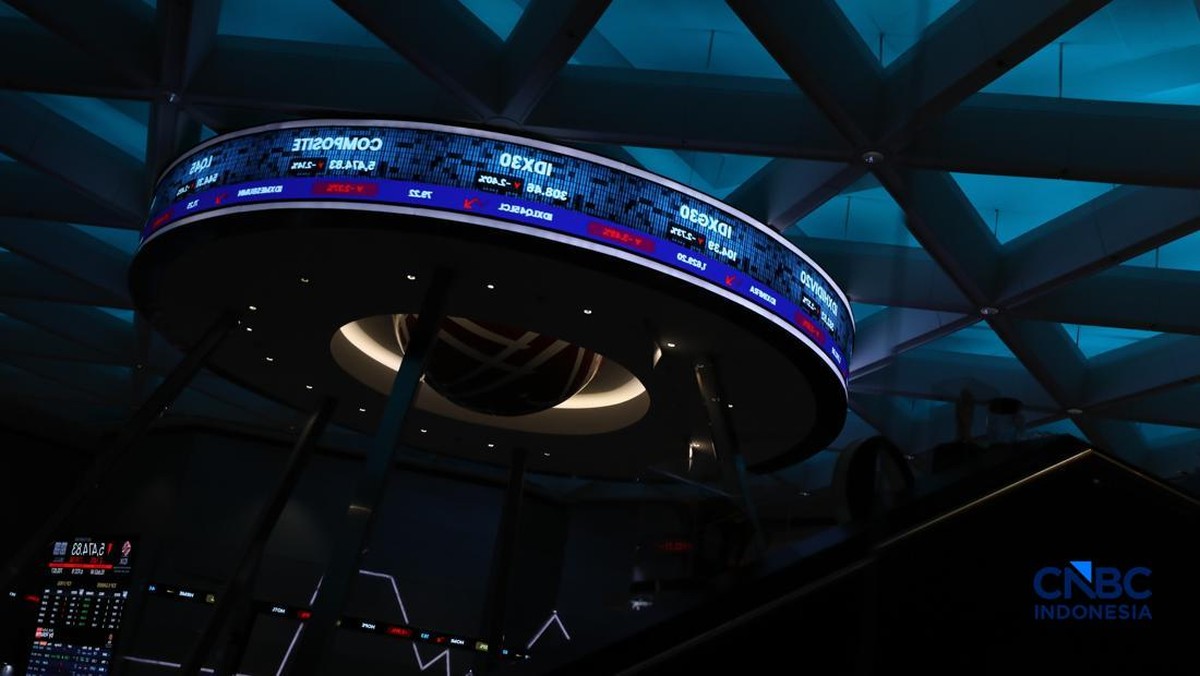
For stock investors, the key question is not whether the stimulus exists, but where the money lands and how it is priced in. Infrastructure-related shares tend to react immediately to the announcement, while the fundamental—earnings, cash flow, and debt profile of the companies involved—determines whether the rally is sustainable or merely sentiment-driven. If valuations have already risen far ahead of fundamental improvement, a stimulus announcement may trigger a short-term spike followed by profit taking.
Pro: a well-targeted package can lift growth above the 5 percent range, expand the tax base, and reduce the unemployment rate through the labor-intensive construction and manufacturing sectors. Kontra: if the package is dominated by subsidies and untargeted spending, the effect on growth is small, while the impact on the fiscal deficit is large.
The macro variables to monitor in the next two quarters are simple. First, the pace of disbursement—not the size of the allocation. Second, the inflation trajectory: BPS data showing inflation settling in the 2–3 percent range gives the central bank more room to keep policy loose; inflation that re-accelerates above the upper bound of the target range narrows that room. Third, the rupiah and capital outflow flows: a stable exchange rate signals that global investors are not hedging against domestic risk, and that the stimulus is being read as fiscal discipline rather than fiscal improvisation.
"The issue is not whether the state has money, but whether the money arrives at the right place at the right time. A budget that is large on paper but slow in execution does not move the economy—it only moves the deficit."—an economic analyst
Ultimately, the Rp31 triliun package should be read as a bridge, not a destination. Its success will be measured not by the announcement, but by whether 2027 opens with stronger private investment, stable prices, and a state budget that still leaves room for structural priorities. The market will make its own judgment in the weeks ahead, based on the data that follows—not on the size of the number itself.










Comments (0)