 sarah-anjani
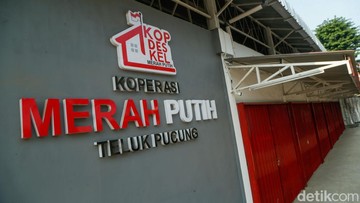
Menteri Koordinator Bidang Pangan Zulkifli Hasan Scenes memang antidote memastikan bahwa>gaji manajer Koperasi Desa Merah Putih tidak dibebankan kepadaAnggaran Pendapatan dan Belanja Negara (APBN) secara selamanya.-badge Latternegara Guaranteer compensation for the managers of the Red and White Village Cooperatives for two years worth Rp 6,8 million to Rp 8,3 million per month, with the fiscal burden temporarily shouldered by the State Budget until the cooperatives are considered capable of being financially self-sufficient.geb The scheme, which is still relatively fresh in the public's awareness, has now entered a phase where the debates have shifted from whether the program will run to who actually bears the cost of the operations.geb
Angka di Balik Kompensasi Manajer
Based on the figures that have begun to circulate, the monthly compensation range for village cooperative managers sits in the Rp 6,8 million to Rp 8,3 million range. For a position that is often compared to the management of a village-owned enterprise (BUMDes), this figure sits in the upper-middle band when viewed against regional minimum wage adjustments in2025, and above the average income of administrative officers in most districts.
Economically, compensation functions as a price of labor. The higher the price, the more difficult it is to recruit competent managers, but the higher the cost structure, the more burdensome the burden for the cooperative members themselves. The tiered range of Rp 6,8–8,3 juta indicates that the compensation is not uniform, but instead is tied to the scale of the village, the volume of assets managed, or the stage of the business. In one sentence: this is a pricing mechanism, not a fixed salary structure.
"When the state still bears the wages, the question is not whether the salary is high or low, but when the transfer of financing will occur. A two-year transition period is a political promise, but its success is determined by how fast the cooperatives' cash flow improves." — an economist observing the fiscal aspect of the program
The range of Rp 6,8–8,3 juta, if multiplied across tens of thousands of villages, produces a fiscal number that is not small. This is where the burden of the APBN enters the frame.
Two Perspectives on the APBN Financing Scheme
On one side, the state-finance scheme is read as a form of capacity building. New cooperative institutions do not have a track record, no accumulated capital, and no access to banking credit at the start. Without an initial subsidy, managers cannot be recruited, administrative systems cannot be built, and business turnover cannot be created. The two years of APBN funding are seen as seed capital in human resources: an investment in institutional strengthening that is expected to pay off later, in the form of higher member income and greater local economic circulation.
On the other side, the scheme raises questions about sustainability and discipline in budget management. Compensating managers from the state budget creates a moral hazard risk: managers may behave as if they are officials rather than as business actors, and once the subsidy ends, there is no guarantee that the cooperative's income is able to cover the same cost structure. When this kind of fiscal spending expands, it can put pressure on the efficiency ratio of the APBN, especially if the projection of deficit and the ratio of debt to GDP continue to move in an unfavorable direction.
The allocation of 23 thousand buildings that have been reported as completed or nearly completed illustrates this. Physical assets are visible, but the operational cost of managing them — including manager compensation — is a recurring item. Assets require recurring costs, and recurring costs are where fiscal sustainability is tested.
Why the Ceiling Figure Matters
The upper limit of Rp 8,3 juta is worth dissecting. Economically, this figure sets a signal to the labor market: managing a cooperative village must be made attractive to people with accounting, marketing, and logistics skills. If the ceiling is too low, the cooperatives will struggle to recruit quality managers, and poor management will directly hit the cooperative's operating margin.
Conversely, if the ceiling becomes a reference standard that is difficult to reduce later, the transition to independent financing becomes harder. The key is the exit mechanism: is there a performance-based scheme that links compensation to cooperative profitability? Without such a mechanism, theRp 8,3 juta is not just a wage, but a new fiscal baseline.
Projections and Watchful Points for the Market
For market participants and economic observers, the program opens at least three areas of observation. First, the pace of the transition: whether the two years end with cooperatives able to cover their own compensation. Second, the liquidity and credit conditions for cooperative banks, which will be heavily dependent on external capital and government guarantees. Third, the sentiment of the cooperative sector, which is currently moving between optimism about market share expansion and caution regarding governance.
In the end, the announcement that manager compensation is covered by the APBN for two years is a signal about the state's willingness to bear short-term costs for a long-term institutional goal. The success of this story is not measured by how much is spent in the first year, but by how little of it is still spent in the third year. That is the fundamental yardstick.













Comments (0)