 sarah-anjani
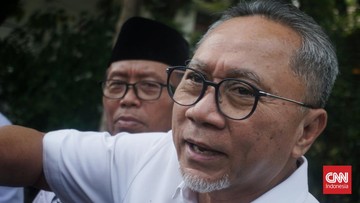
Berdasarkan dokumen anggaran negara dan sejumlah keterangan resmi骨质Recently yang circulate regarding Coefficient Descriptor Manager of the Red and White Cooperative (Kopdes Merah Putih), one crucial point deserves attention: the wage and compensation fund for managers of the cooperative is confirmed to originate from the State Revenue and Expenditure Budget (APBN), even though the distribution mechanism is routed through Agrinas, a state-owned holding in the food and agriculture sector. This detail, though administrative in appearance, carries fiscal implications that go far beyond the managerial structure of a single business entity.
To understand the significance of this arrangement, the fiscal context must first be laid out. In the 2025 State Budget, the deficit target is set at around Rp289 trillion, or roughly 2.5 percent of gross domestic product, with a ceiling on total debt of approximately 66 percent of GDP. State revenue is heavily dependent on tax receipts, and any state expenditure that grows faster than revenue must be compensated through additional financing or efficiency gains. When a new scheme places a recurring expense, such as managerial salaries, on the state budget, the question that economists usually ask is simple: does this constitute productive spending or does it add to the long list of items that crowd out programs with clearer social returns?
How the Funding Channel Works
Mechanically, the flow of funds can be described as follows: the state, through the Ministry of Finance, records the allocation within the budget line; Agrinas then acts as the distribution channel, receiving the funds and passing them on to the entities under its supervision. The word the government uses is sourced, meaning the money is public money. The managerial positions in question are those forming the backbone of the cooperative structure, a format that combines dormant members, capital participation, and professional management in a single organization.
The difference between budget line and disbursement channel matters because it determines which institution bears accountability. When funds move through a state-owned holding, the questions of auditing trail become longer: there is the Ministry of Finance as budget holder, Agrinas as the executing entity, the cooperative as the recipient, and the managers as beneficiaries. A transparent design would require clear standard operating procedures, published wage benchmarks, and regular public reporting on the realization of these funds.
Di Sisi Satu: Argumen untuk Pendanaan/APBN
Proponents present several rational arguments. First, using the state budget makes the income of cooperative managers formally and traceable, avoiding the practice of deriving salaries from cooperative members themselves, which in the early stages of the cooperative could burden capital owners with unnecessary costs. Second, state financing gives managers a degree of certainty, and certainty is a prerequisite for attracting competent human capital into the agricultural and food sector, a sector long known for difficulty in retaining professionals. Third, if the cooperative succeeds and expands its members, the state budget burden can theoretically shrink over time as the enterprise becomes self-sustaining.
This logic follows a well-established pattern in economic thought, as expressed in the following principle:
In Keynesian fiscal doctrine, state spending is justified not by its direct return, but by the employment, demand, and institutional capacity it creates. The test is whether the spending builds capability that the market cannot yet provide on its own.
On this view, financing managerial salaries is not a subsidy, but an investment in institutional capability that the market has not yet been able to generate.
Di Sisi Lain: Risiko terhadap Disiplin Fiskal
The counter-argument is equally serious. First, there is a risk of mission creep: if managerial salaries come from the state budget, other cost components such as facilities, operations, and financing costs may follow the same path. A recurring budget line is rarely one-off, and its magnitude tends to grow as the number of cooperatives expands. Second, there is a dependency issue: a cooperative should ideally be owned by its members, but if a substantial portion of its cost structure is financed by taxpayers, the ownership becomes hybrid, and that hybrid can create conflicts of interest between political objectives and economic efficiency.
Third, the financing mechanism via a state-owned holding introduces a new layer of intermediation. Every layer added between the treasury and the field means a longer chain of accountability and a higher possibility of leakage, even if only through inefficiency rather than corruption. Fourth, in a tight fiscal space, spending on managerial compensation competes directly with spending on health, education, and infrastructure. Fundamental analysts of the budget always watch this substitution effect, because the total envelope does not expand just because a new program is added.
Some of the Indicators That Should Be Watched
Several indicators should be monitored. The first is the size of the allocation relative to total agricultural spending and total deficit. The second is whether the arrangement produces a declining state contribution over time, or an increasing one. The third is transparency: whether wage standards, performance targets, and audit results are published openly. The fourth is market sentiment toward the cooperative model, which can be observed through member participation rates and demand for shares.
Ultimately, financing managerial salaries from the state budget through Agrinas is neither inherently good nor inherently bad. It is a design choice that must be assessed against fiscal capacity, institutional governance, and the cooperative's own path toward self-sufficiency. Investors and the public alike are advised to watch the hard numbers, namely realization figures, audit findings, and the trajectory of state contributions, rather than the rhetoric surrounding them.







Comments (0)